When three different things break in your house at the same time, homeownership suddenly feels less like a proud achievement and more like a high-stakes game of survival. The garbage disposal hums ominously without spinning, a faint yellow water stain appears on the living room ceiling, and the AC starts blowing tepid, humid air right as the summer heat wave hits. Standing in your hallway, overwhelmed by options and anxious about your bank account, knowing which phone call to make first can feel impossible.
This is where ChatGPT becomes one of the most practical tools in your household management toolkit. While the AI cannot turn a wrench, patch dry wall, or inspect a fuse box, it excels at organizing chaotic information, assessing relative risk, and helping you build a clear, logical game plan. Instead of reacting out of sheer panic, you can use structured prompts to translate vague home maintenance problems into a prioritized, actionable strategy. By leveraging AI as a thought partner, you can stop playing guessing games with your living space, protect your financial security, and tackle your home maintenance queue with absolute confidence.
Sorting Safety Hazards From Minor Inconveniences

Understanding the difference between a minor cosmetic flaw and a major structural hazard is the foundation of effective home triage. When faced with a long list of house projects, homeowners frequently fall into the trap of prioritizing what is visually annoying over what is structurally dangerous. A cracked tile near the front door catches your eye every time you walk into the house, so it feels urgent, whereas a faint burning smell coming from an outlet behind the couch might get brushed aside because the lamp plugged into it still turns on.
To break this habit, you can use AI to build a personalized risk matrix for your home. By describing exact symptoms into the chat interface, you can ask the model to rank your current home issues based on potential damage velocity and life-safety risks. The key to making this work is providing hyper-specific details about what you see, hear, and smell.
For instance, consider how vastly different two mechanical issues can be when evaluated through a safety lens. An old furnace repair issue that manifests as a faint ticking sound might simply indicate an aging blower wheel, but if that same heating system begins emitting a dusty or metallic scent during a cold snap, the situation escalates instantly. Inputting those specific environmental cues allows the AI to highlight hidden dangers like carbon monoxide risks or cracked heat exchangers.
Similarly, electrical repair issues should almost always leapfrog cosmetic projects on your priority list. Flickering lights, warm switch plates, or buzzing panel boxes are early warning signs of arcing and fire hazards. When you feed these symptoms into your prompt, instruct the AI to categorize items into three strict buckets:
- Immediate Safety Hazards: Critical issues requiring professional intervention within 24 to 48 hours to prevent property loss or physical harm.
- High-Risk Deterioration: Problems that will rapidly worsen or become drastically more expensive if ignored for more than two weeks.
- Deferrable Maintenance: Purely aesthetic or minor operational issues that can safely sit on the back burner for months without causing secondary damage.
By forcing your home projects through this tripartite filter, you strip the emotional frustration out of your home improvement list and align your immediate focus with actual safety priorities.
Evaluating Water and Drainage Risks Before Mold Takes Over

If safety hazards are the highest priority in a home, water intrusion issues are a close second. Water is uniquely destructive because it rarely stays where it starts; a slow leak inside a wall can silently rot structural framing, ruin insulation, and cultivate black mold long before a single drop drips onto your flooring.
When you discover evidence of water where it does not belong, time is your primary enemy. You can prompt ChatGPT to act as a diagnostic assistant to help you evaluate how fast a moisture issue might escalate.
Step 1: Document the Visual and Structural Evidence
Before writing your prompt, inspect the affected area carefully. Take note of floor discoloration, sagging drywall, standing water, or persistent damp odors.
Step 2: Prompt for Damage Progression Timelines
Ask the AI to model potential worst-case scenarios over a 7-day, 30-day, and 90-day timeline if the issue remains unaddressed. A prompt like “What secondary structural damage occurs if a slow wall leak is left unfixed for three weeks?” will yield a clear breakdown of rot, mold, and dry-wall collapse risks.
Step 3: Differentiate Systemic Leaks From Surface Blockages
Use the AI to distinguish between localized drainage problems and deeper pipe failures. For example, understanding when you need routine drain cleaning versus when you are dealing with a collapsed sewer line completely changes your budget and timeline expectations.
Step 4: Map Out Emergency Containment Actions
Ask for immediate, temporary mitigation steps while waiting for professional help. The AI can guide you through locating localized shut-off valves or creating temporary drainage channels to protect your subfloor.
Step 5: Draft Targeted Diagnostic Questions
Request a list of specific questions to ask when interviewing licensed contractors. Rather than simply asking for general plumbing repairs, you can ask the AI to generate technical prompts about hydrostatic pressure testing, pipe cameras, or moisture metering so you can communicate effectively with service technicians.
This structured evaluation process ensures you do not mistake a catastrophic internal leak for a simple surface annoyance, helping you lock down water damage before it turns into a multi-thousand-dollar remediation project.
Assessing Climate Control and Seasonal Urgency
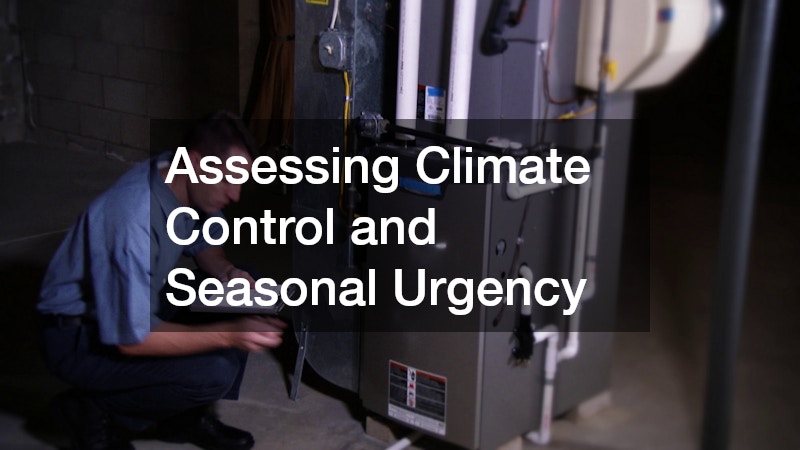
I learned the hard way how quickly local weather can turn a minor utility annoyance into an absolute household disaster. A few summers ago, my cooling system began making a soft whistling sound in late May. It still cooled the house reasonably well, so I shoved it to the bottom of my to-do list while I spent weekends painting the back deck and organizing the garage. By mid-July, an unexpected heat wave pushed temperatures past a hundred degrees. Naturally, that was the exact moment the system gave out completely, leaving my family sweltering in an eighty-five-degree living room while every local repair company in the city quoted a three-week waitlist just to swing by for an inspection.
Had I run those early symptoms through an AI tool alongside my local weather forecast, I would have handled things entirely differently. ChatGPT can process live or seasonal climate data alongside your equipment’s age to help you calculate the precise risk of running aging infrastructure through peak season.
When evaluating mechanical systems, context is everything. An AC repair needed in the mild climate of early spring is an easy, non-urgent item that allows you to shop around for competitive service quotes. That exact same mechanical fault in the dead of July is a full-blown living crisis that will cost double for emergency response fees.
You can ask the AI to cross-reference your current equipment issues with upcoming seasonal forecasts to help you decide what to fix immediately. Input the age of your equipment, any unusual noises or cycling patterns, and your zip code’s upcoming 30-day weather outlook. The AI can help you determine whether you should book specialized HVAC contractors during their slow shoulder seasons—typically spring and autumn—when rates are lower and schedules are open, rather than waiting for an extreme freeze or heat wave to force your hand. Planning your mechanical updates around seasonal stress shifts your role from panicked homeowner to proactive property manager.
Balancing Functional Upgrades Versus Cosmetic Refreshes

It is remarkably easy to get captivated by cosmetic home projects. We spend hours scrolling through beautiful interior design feeds, imagining how incredible a brand-new kitchen back-splash or a modern bathroom vanity would look in our space. Cosmetic improvements provide an immediate emotional payoff because we can see and enjoy them every single day. The trouble arises when we funnel limited home maintenance budgets into visual upgrades while quiet, underlying structural components slowly degrade behind the scenes.
Using ChatGPT helps strip away aesthetic bias so you can evaluate projects objectively based on long-term home health and financial return.
When sorting through competing demands, imagine placing every project into a two-by-two framework based on structural risk and long-term cost.
Projects with high structural risk—such as foundation cracks or roof leaks—always belong in your immediate “Fix First” category. High-risk functional items with lower immediate structural danger, like drafty seals or energy-inefficient units, fall into a “Plan Next” category. Purely aesthetic updates with low structural risk, like repainting a hallway or updating cabinet hardware, sit firmly in the “Defer Last” zone.
When you feed your entire, unsorted home project wishlist into an AI, instruct it to evaluate each item using this risk-versus-reward perspective. Ask the model to compare the financial risks of delaying each project over a twelve-month period.
For example, you might be debating between starting a full window replacement project to update the look of your living room or addressing a chipped, aging shower tub with a targeted tile resurfacing treatment. While both projects improve the enjoyment of your living space, they serve radically different functional purposes. Drafty windows leak conditioned air, driving up month-to-month utility costs and exposing window frames to wood rot from condensation. On the other hand, worn surface glazes in a tub might look terrible, but as long as the underlying waterproofing membrane remains intact, the damage is purely visual.
When you ask AI to organize these competing priorities, prompt it to calculate the hidden cost of delay. Ask questions such as: “Which of these two projects, if delayed by six months, carries a higher likelihood of causing secondary structural damage or financial loss?” The answer will almost always steer you toward functional envelope integrity over aesthetic beauty, saving you thousands of dollars in avoidable secondary repairs down the road.
Managing Access, Security, and Specialty Trade Logistics
Certain home maintenance issues carry a unique level of urgency because they compromise the fundamental security, access, or baseline livability of your house. When a primary entry point fails or a core household system goes dark, your routine breaks down instantly. Sorting through these secondary mechanical and specialty trade tasks requires a logistical mindset to ensure you bring in the right experts in the correct order.
Consider the compounding frustration of waking up to find your vehicle trapped inside your garage on a Monday morning. A sudden mechanical failure in this area is not just a nuisance; it represents an immediate disruption to your employment, safety, and daily mobility. When facing a complex overhead issue, using AI to outline the potential failure points—such as broken torsion springs, snapped cables, or misaligned safety sensors—allows you to describe the problem clearly when calling for emergency garage door repair services. This precision prevents miscommunications and ensures the service vehicle arrives with the correct replacement parts on the first visit.
The same logical coordination applies when managing overlapping appliance repairs or scheduling multiple specialized tradespeople during a single week. If your kitchen dishwasher fails while you are simultaneously dealing with low water pressure in the main bathroom, your natural instinct might be to call two completely separate repair companies.
However, running your overall task list through ChatGPT can help you spot overlapping trades. The AI can remind you that licensed plumbers can inspect and service both the kitchen appliance connection and your bathroom pressure-reducing valve during the same service call, saving you hundreds of dollars in redundant service-call fees.
To maximize this logistical coordination, keep these three operational principles in mind when organizing specialty repairs:
- Batch By Trade: Group all open household tasks by the specific license required so a single visiting professional can clear multiple items from your list in one visit.
- Prioritize Access and Security First: Resolve broken locks, non-functional garage doors, and main water shut-off issues before tackling internal, room-specific conveniences.
- Differentiate Repair From Replacement: Use AI to calculate the standard lifespan of major home systems before calling for service, helping you decide whether to repair an old unit or put that service call fee toward a full system replacement.
By using AI to analyze the interconnected nature of your home’s mechanical systems, you transform a chaotic web of separate home chores into an efficient, streamlined master schedule.
Moving From Overwhelm to Strategic Control
Managing a home does not have to feel like an endless series of unorganized emergencies. While maintenance challenges are an inevitable part of property ownership, the anxiety that comes with them usually stems from uncertainty—not knowing what to fix first, how much it should cost, or who to call to get the job done right.
By integrating ChatGPT into your home management workflow, you gain an objective, tireless assistant capable of sorting through the noise. You can instantly separate genuine safety hazards from cosmetic distractions, build logical timelines around seasonal risks, and coordinate specialized trades with maximum efficiency. Instead of guessing your way through home maintenance, take your current, scattered list of household to-dos, paste it into an AI chat session today, and let structured logic guide your next step toward a safer, better-maintained home.
About the Author