Building a home is more than just constructing four walls and a roof—it’s a transformative journey that blends creativity, practicality, and foresight. In an era where housing markets fluctuate and material costs rise unpredictably, embarking on this project without a solid plan can lead to nightmares of escalating expenses and frustrating delays. According to industry reports from the National Association of Home Builders, over 80% of custom home projects experience cost overruns averaging 20-30%, often due to inadequate initial planning. A comprehensive construction plan acts as your roadmap, mitigating these risks by anticipating challenges and aligning resources efficiently. It ensures that every dollar spent contributes to a structure that not only stands the test of time but also enhances your daily life.
What can you expect to learn from this guide? We’ll walk you through every critical phase, from envisioning your ideal living space to crossing the threshold on move-in day. You’ll discover how to collaborate with professionals, manage budgets with precision, and coordinate trades without chaos. Whether you’re a first-time builder or a seasoned renovator, these insights will equip you with the tools to transform your vision into reality. By the end, you’ll view home building not as an overwhelming ordeal, but as an exciting opportunity to craft a legacy. Let’s dive in, starting with the foundational step: defining your vision, budget, and timeline.
Defining Vision, Budget, and Timeline With the Right Professionals

The cornerstone of any successful home build is a crystal-clear vision, backed by a realistic budget and a structured timeline. This phase sets the tone for everything that follows, ensuring that your dream home aligns with your lifestyle rather than forcing compromises later. Begin by translating your lifestyle needs into clear construction priorities. Ask yourself: How many people will live here? Do you entertain frequently, requiring an expansive kitchen island? Are remote work setups essential, demanding dedicated office nooks with natural light? Sketch rough floor plans or use free online tools to map out must-haves versus nice-to-haves. This exercise prevents scope creep, where vague ideas balloon into unaffordable additions.
Engaging the right professionals early is non-negotiable. Custom home builders, with their expertise in tailoring designs to unique sites and preferences, can bridge the gap between inspiration and execution. Look for builders certified by organizations like the National Association of Home Builders, with portfolios showcasing diverse projects. During initial consultations, arm yourself with pointed questions to avoid misalignment: “How do you handle change orders mid-project?” “What percentage of your builds come in under budget, and why?” “Can you provide references from clients with similar family dynamics?” These inquiries reveal their communication style, problem-solving approach, and commitment to transparency. A good builder will listen intently, perhaps suggesting tweaks like multi-functional rooms to optimize space without inflating costs.
Once aligned, establishing a realistic budget demands honesty and buffers. Factor in hard costs (materials, labor) at 60-70% of the total, soft costs (permits, design fees) at 20-25%, and a 10-15% contingency for surprises like soil surprises or supply chain hiccups. Use spreadsheets or apps like Buildertrend to break it down: $200,000 for framing, $50,000 for electrical. Consult your custom home builder for localized cost benchmarks—urban areas might see lumber prices 20% higher than rural ones. Overestimating slightly here saves stress later.
Preparing the Site and Managing Heavy Work Efficiently
With your vision locked in, it’s time to break ground—literally. Site preparation is the unsung hero of home building, where heavy machinery transforms raw land into a stable canvas. Mishandling this stage can lead to uneven foundations or erosion issues that haunt you for years. Start by determining which equipment is necessary for excavation, grading, and foundation work. A basic kit might include excavators for digging footings, bulldozers for clearing vegetation, and compactors for soil densification. Soil tests, conducted by a geotechnical engineer, dictate specifics: sandy soils may need deeper pilings, while clay-heavy lots require specialized grading to prevent shifting.
Partnering with a reliable construction equipment rental company streamlines this process, offering access to top-tier machinery without the overhead of ownership. Evaluate rental terms meticulously: daily versus weekly rates (opt for longer terms to cut costs by up to 30%), included maintenance, and fuel surcharges. Insurance requirements are crucial—ensure the rental covers operator errors, and clarify if your general liability policy overlaps. Operator responsibilities vary; some companies provide certified pros, ideal for complex tasks like trenching for utilities, while others expect you to supply them. Vetting via reviews on platforms like EquipmentWatch can highlight red flags, such as frequent breakdowns.
Coordinating equipment delivery is an art form in efficiency. Schedule arrivals just-in-time: excavators on Day 1 for clearing, followed by dump trucks for hauling spoil. Overlaps cause idle time—machines sitting unused rack up fees—and added costs from rushed logistics. Use project management software to sync with subcontractors, factoring in weather windows; rainy seasons can double grading time in humid climates.
Keeping the Jobsite Clean and Compliant From Day One

A cluttered jobsite is a hazardous one, breeding accidents, slowing productivity, and inviting regulatory headaches. From the outset, integrate cleanliness into your construction rhythm to foster efficiency and compliance. Creating a debris management plan before construction begins is proactive gold. Map out waste streams: wood scraps from framing, concrete slurry from pours, and packaging from deliveries. Designate centralized bins—sorted by recyclables, hazardous materials like paints, and general refuse—to minimize cross-contamination and streamline pickups.
Scheduling regular clean-outs, ideally bi-weekly, maintains safe work conditions. Dust and debris can obscure trip hazards or electrical lines, contributing to 20% of construction injuries per CDC data. Coordinate with your general contractor to align sweeps after major milestones, like post-drywall, when scraps peak. This rhythm prevents buildup that could delay inspections; a tidy site signals professionalism to building officials.
Understanding local disposal regulations and recycling options is non-negotiable for compliance and cost savings. Municipal codes vary—some cities mandate 50% diversion from landfills, offering rebates for recycled metals. Hazardous waste like asbestos from demos requires certified haulers. Partnering with a junk removal service ensures seamless handling; they often provide on-demand pickups, volume-based pricing, and documentation for audits. Vetting via BBB ratings confirms reliability, avoiding fly-by-night operators who might dump illegally, netting you fines.
Choosing Structural and Exterior Materials for Long-Term Performance
Your home’s skeleton and skin—structural framing and exterior cladding—must withstand decades of wear. Selecting materials here demands a balance of innovation and pragmatism. Evaluate durability, energy efficiency, and climate suitability first. In hurricane-prone areas, impact-resistant siding trumps vinyl; for arid zones, reflective coatings combat heat gain. Energy modeling software, like REM/Rate, quantifies benefits: proper insulation could slash HVAC loads by 25%.
Comparing lifecycle costs versus upfront material expenses reveals true value. Steel framing, while pricier initially than wood, resists pests and fire, amortizing over 50+ years. Exteriorly, metal roofing stands out for its longevity—up to 70 years versus asphalt’s 20—resisting corrosion and reflecting UV rays to lower cooling bills. A 2,000 sq ft roof might cost $15,000 more upfront but save $1,000 annually in energy, per Oak Ridge National Lab studies.
Installation considerations profoundly affect warranties and performance. Metal roofing, for example, requires precise underlayment and flashing to prevent leaks; subpar work voids 40-year guarantees. Hire certified installers via the Metal Roofing Alliance, and insist on airflow vents to curb condensation. Similarly, fiber cement siding needs proper sealing against moisture, extending its 50-year span.
Planning Outdoor Living Spaces Alongside Core Construction
Home building isn’t confined to indoors; outdoor realms like patios and decks extend your living footprint, blending seamlessly with the core structure. Integrating patios and decks into the original site and drainage plan prevents retrofits that disrupt timelines. During site surveys, mark grading slopes to channel runoff away— a 2% pitch averts pooling under decks. Consult landscape architects to align footings with house foundations, ensuring load-bearing integrity.
Material selection hinges on exposure, use patterns, and maintenance tolerance. Sun-baked patios suit stamped concrete for heat resistance, while shaded decks favor rot-proof composites. Engaging patio contractors early brings expertise in permeable pavers that recharge groundwater, complying with eco-regs in water-scarce regions. For decks, a composite deck builder excels in low-maintenance synthetics—blends of recycled plastic and wood fiber—that mimic teak without annual sealing, lasting 25-50 years.
Coordinating timelines ensures exterior builds don’t delay final inspections. Sequence patios post-foundation but pre-siding, allowing utility trenching. Decks can follow framing, with railings installed alongside windows for unified aesthetics. Stagger subcontractor arrivals: patio contractors in Week 8, composite deck builder in Week 12, syncing with interior rough-ins to avoid weather exposure.
Coordinating Interior Systems Before Walls Are Closed
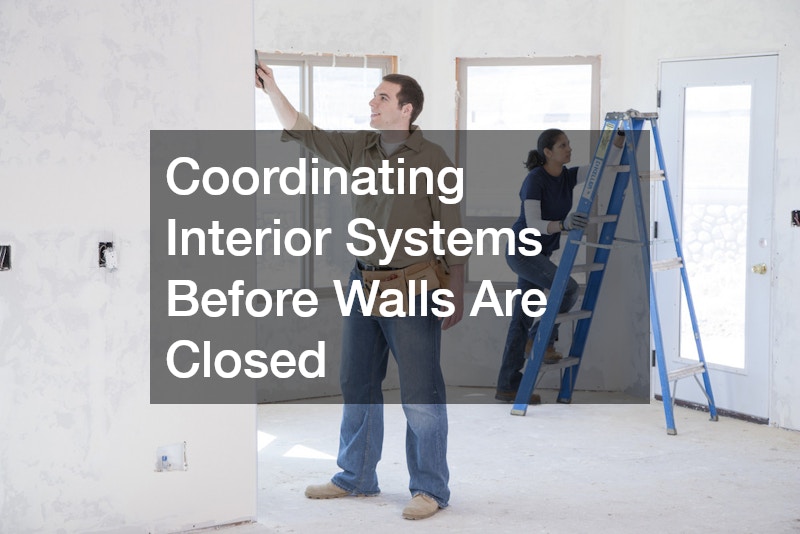
Behind the glamour of finishes lie the vital veins: plumbing, electrical, and HVAC. Coordinating these before the walls close averts nightmares like inaccessible pipes. Planning plumbing layouts for efficiency and future access starts with blueprints annotated for runs—stacked chases minimize drywall penetrations. Prioritize main stacks near high-use areas like baths to shorten laterals, reducing clogs.
Avoiding common mistakes that lead to costly rework is paramount. Misjudging vent placements can cause gurgling drains; always elevate roof vents 6 inches above the roofing per IPC codes. Overloading circuits? Map loads early—kitchens hit 10,000 watts easily. Small plumbing services shine here, offering nimble crews for custom runs without big-firm premiums. Their localized knowledge navigates quirky codes, like seismic bracing in quake zones.
Ensuring proper pressure, drainage, and code compliance demands pros. Aim for 40-60 PSI via regulators; test slopes at 1/4 inch per foot for gravity flow. Certifications from ASSE verify adherence, dodging failed inspections that halt progress.
Designing Functional and Cohesive Interior Spaces
With systems secured, shift to the soul of your home: interiors that harmonize form and function. Translating architectural plans into livable environments requires vision beyond lines on paper. Envision flow—does the foyer open to views, easing entry? Balance aesthetics with durability and daily use: quartz counters resist stains in family hubs, while velvet sofas suit formal lounges.
Room-by-room planning for lighting, storage, and traffic flow creates cohesion. Kitchens thrive on task lighting over sinks (150 foot-candles) and islands with pendant clusters for ambiance. Bedrooms need zoned closets with pull-outs for linens. Hallways? Recessed LEDs guide without glare. Storage hacks like built-ins under stairs reclaim dead space, adding 10% utility.
An interior design firm alleviates decision fatigue, curating palettes and layouts with software like SketchUp. They source trade discounts, saving 15-20%, and ensure ADA-friendly thresholds for aging. Pros spot inefficiencies, like awkward door swings blocking paths, and refine for ergonomics.
Selecting and Installing Interior Finishes That Last
Finishes polish your canvas, but longevity separates fleeting trends from heirlooms. Choosing wood species and finishes for hardwood floor installation based on climate and lifestyle is key. Oak’s Janka hardness (1,200) suits high-traffic foyers; softer pine fits cozy nooks but needs polyurethane topcoats in the humid South. UV-cured oils enhance grain without yellowing.
Preparing subfloors to prevent warping and noise issues demands diligence. Acclimate planks 7-10 days onsite; level variances over 3/16 inch per 10 feet invite squeaks. Underlayments like cork dampen sound, complying with 50dB limits in condos.
Understanding installation methods and their long-term implications guides choices. Nail-down for stability on concrete slabs; floating clicks ease over radiant heat, expanding/contracting freely. Pros use laser levels for seamless joints, backed by 50-year warranties.
Final Inspections, Punch Lists, and Move-In Preparation
The homestretch: inspections and punch lists seal your success. Conducting thorough walkthroughs identifies deficiencies systematically. Hire a third-party inspector for objectivity—check caulking gaps, uneven grout, or flickering outlets.
Organizing and prioritizing punch-list items streamlines fixes. Categorize: safety (loose railings) first, cosmetics (paint touch-ups) last. Assign deadlines—cosmetics in 7 days—to motivate subs. Track progress in shared spreadsheets, fostering accountability.
Verifying documentation, warranties, and compliance certificates is crucial. Compile manuals in binders: HVAC’s 10-year compressor coverage, electrical permits stamped by AHJs. As-builts map deviations from plans, aiding future mods.
Building With Confidence and Clarity

Informed planning isn’t just strategy—it’s empowerment, yielding smoother outcomes from groundbreaking to key handover. We’ve explored how visioning with custom home builders, efficient equipment from rental pros, and proactive junk removal services weaves a tapestry of efficiency.
Coordination across phases—metal roofing’s resilience, patio contractors’ integrations, small plumbing services’ foresight—ensures harmony. No siloed steps; each informs the next.
Approach home building as a structured process, not a singular event. Savor milestones, adapt resiliently, and celebrate the sanctuary you craft. Your dream home awaits—build it boldly.
About the Author